May 17th, 2026
10 Social Proof Examples for Landing Pages 2025
10 proven social proof tactics for landing pages: live user counts, trust badges, testimonials, UGC, case studies, expert endorsements, and real-time alerts.
Warren Day
Social proof is one of the most effective tools for building trust and increasing conversions on landing pages. When visitors see others using or endorsing a product, it reassures them that they’re making a good choice. From live user counts to expert endorsements, here are 10 proven ways companies are using social proof and other landing page best practices to boost engagement and sales:
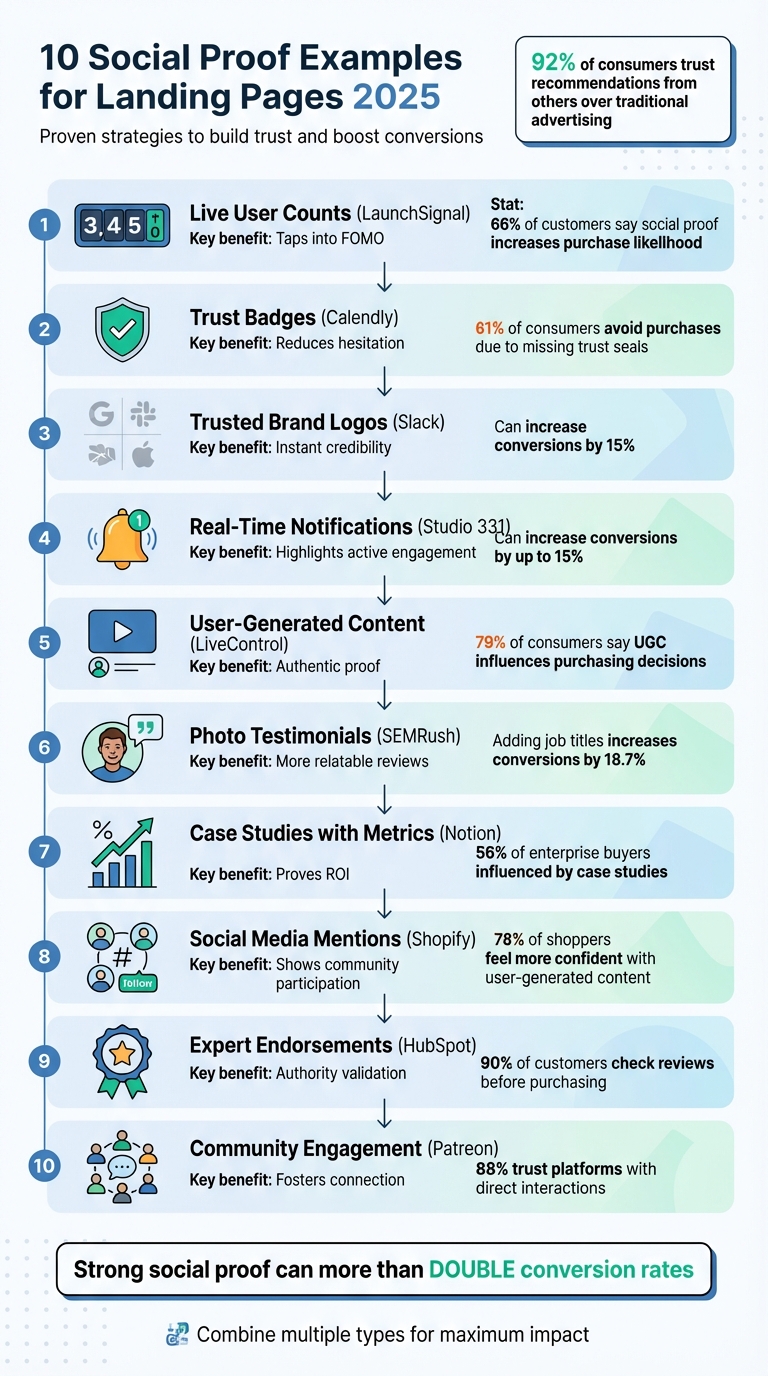
- Live User Counts (LaunchSignal): Displaying real-time user numbers, like "12,847 early adopters joined", encourages action by tapping into FOMO.
- Trust Badges (Calendly): Security certifications (e.g., GDPR) near sign-up forms reduce hesitation and build confidence.
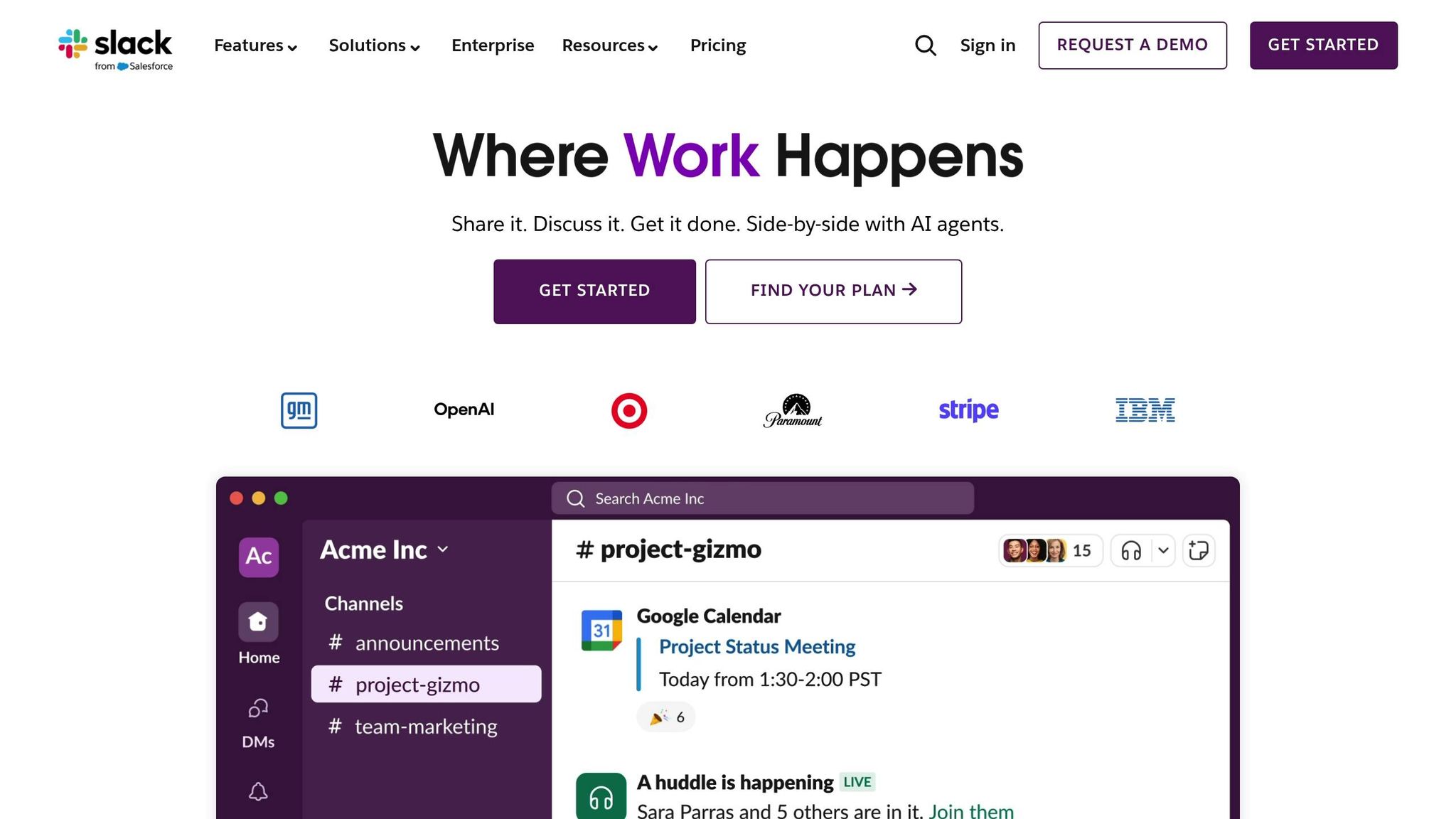
- Trusted Brand Logos (Slack): Featuring logos of well-known companies builds instant credibility.
- Real-Time Notifications (Studio 331): Pop-ups showing recent purchases or activity highlight active engagement.
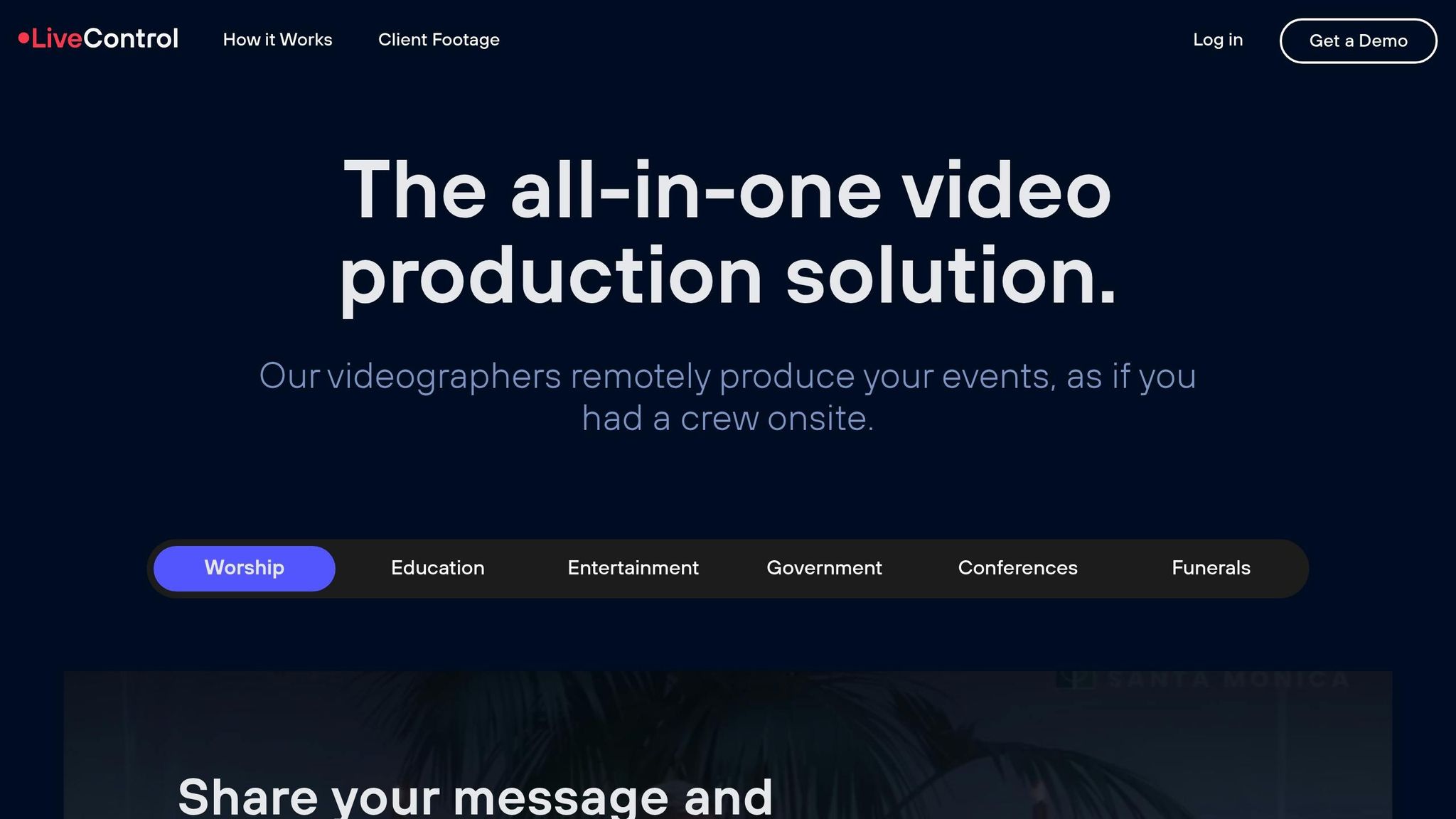
- User-Generated Content (LiveControl): Showcasing live customer broadcasts adds authenticity and demonstrates product capabilities.
- Photo Testimonials (SEMRush): Testimonials with photos, names, and job titles make reviews more relatable.
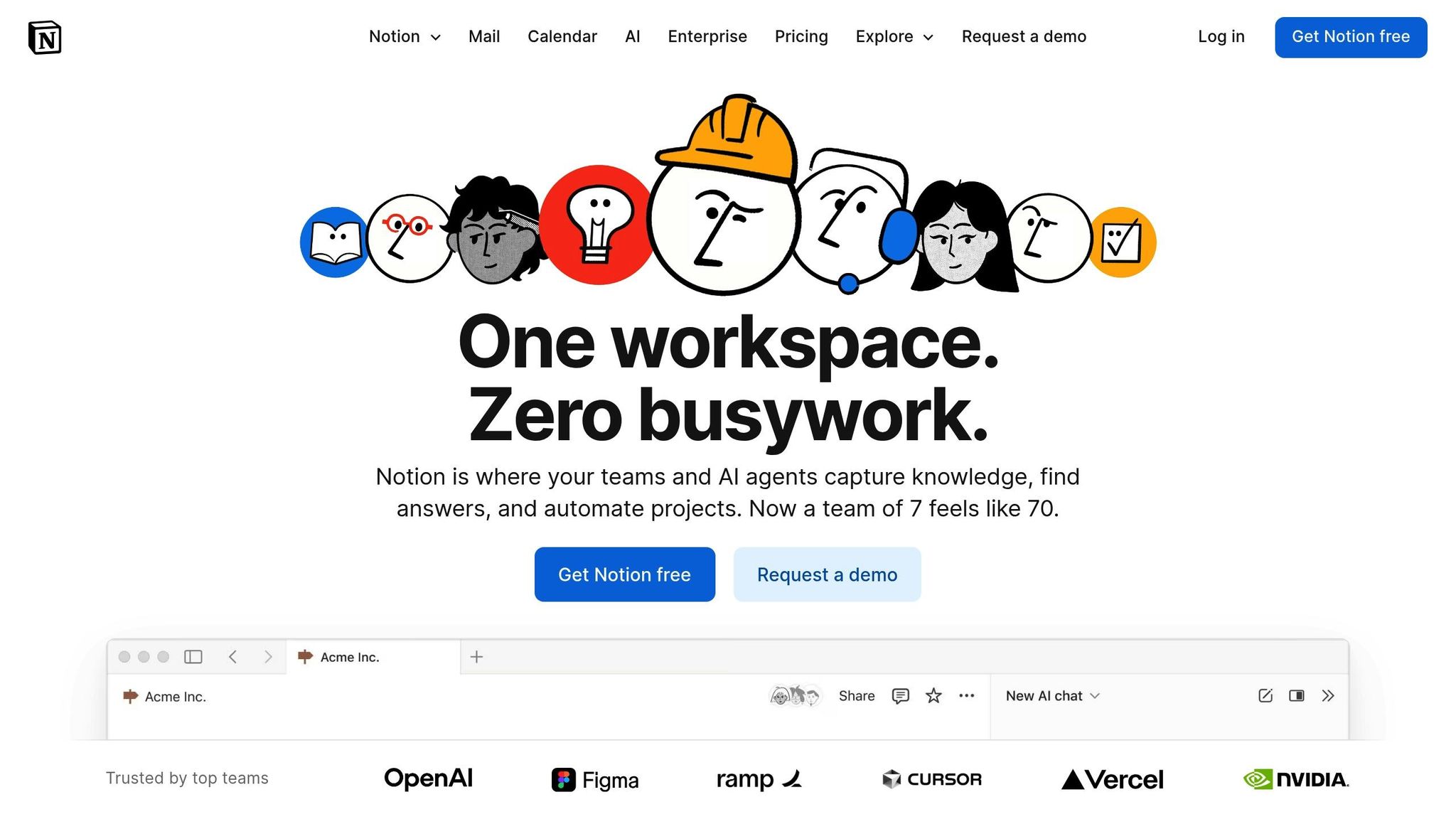
- Case Studies with Metrics (Notion): Sharing measurable results (e.g., productivity increases) proves the product’s value.
- Social Media Mentions (Shopify): Highlighting branded hashtags and live feeds shows active community participation.
- Expert Endorsements (HubSpot): Quotes from industry leaders reinforce trust and authority.
- Community Engagement (Patreon): Showcasing active forums and creator earnings fosters connection and trust.
Quick Tip: Combining multiple types of social proof - like testimonials, real-time data, and trust badges - can significantly improve conversion rates. For example, studies show that pages with strong social proof can more than double conversions.
10 Types of Social Proof for Landing Pages with Conversion Statistics
1. LaunchSignal - Live User Counts and Email Collection
Effectiveness in Building Trust
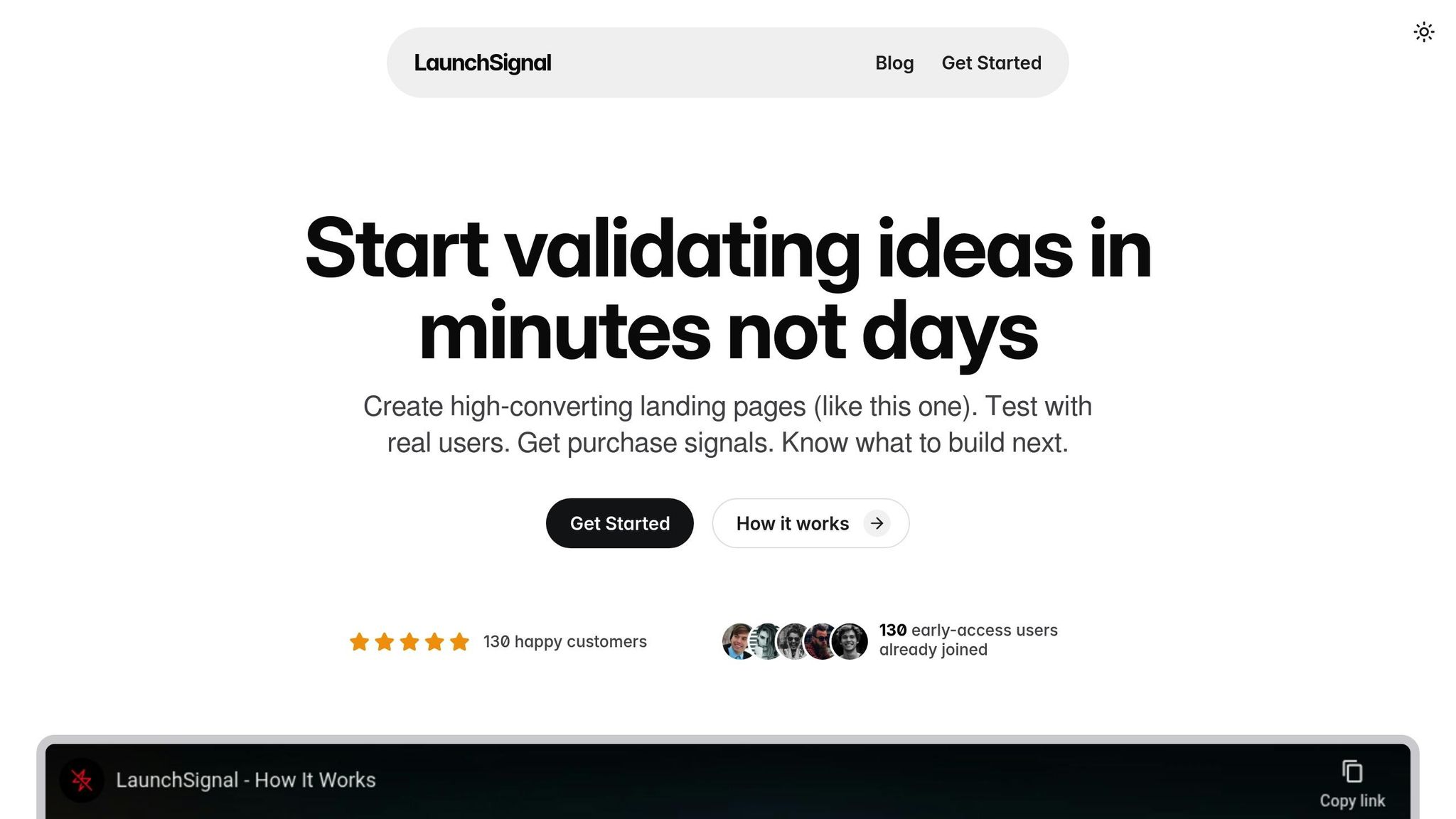
LaunchSignal’s landing pages showcase how pairing live user counts with an email capture form can instantly build credibility. Imagine landing on a page that proudly states, "Join 12,847 early adopters." That number alone taps into the "Wisdom of the Crowd" effect - when people see others signing up, it reinforces the idea that they’re making a smart choice. Placing these counters prominently at the top of the page ensures visitors see this social proof right away. And it works - 66% of customers say social proof increases their likelihood of making a purchase. Combine this with a no-fuss email form, and you’ve got a frictionless way to build trust. Visitors don’t feel pressured; they’re just showing interest. This approach is perfect for founders looking to grab the attention of early adopters.
Relevance to the Target Audience
For founders, proving that a product has traction is key. LaunchSignal’s strategy aligns perfectly with early adopters who want to be part of the next big thing before it takes off. The live counter plays on FOMO (fear of missing out), encouraging quick action while it’s still “early.” Plus, LaunchSignal’s analytics let founders time the display of user counts strategically, ensuring they avoid the downside of showing low numbers. Instead of a potential weakness, this becomes a clever tool for boosting conversions.
2. Calendly - Trust Badges for Security
Effectiveness in Building Trust
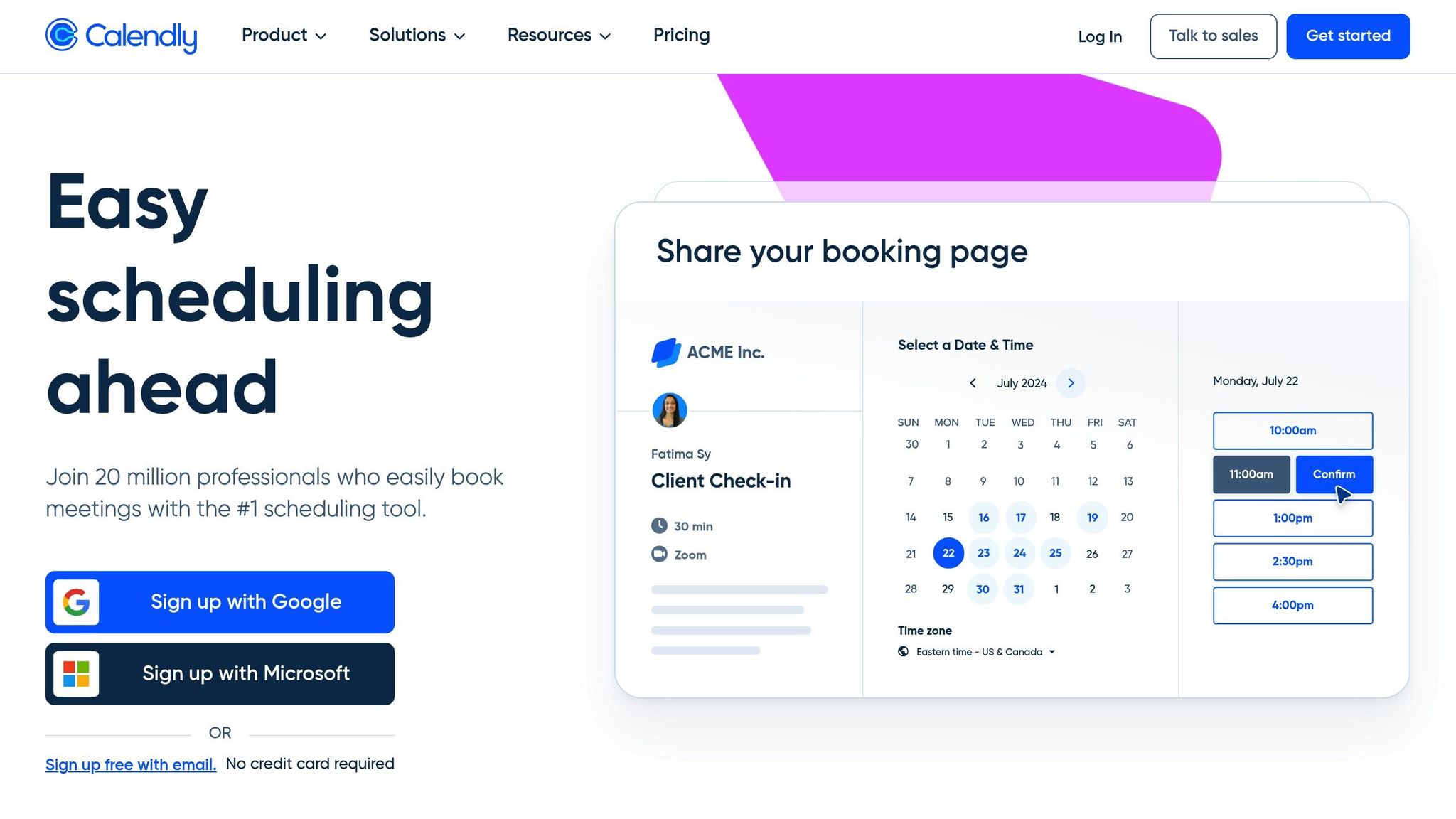
Calendly’s landing page prominently displays GDPR, ISO, and PCI DSS badges - visual cues that highlight the platform’s commitment to data security. These trust signals are critical, especially when you consider that 61% of consumers avoid purchases due to missing trust seals. By showcasing certifications from recognized regulatory bodies, Calendly reassures users that its security practices meet rigorous standards. Placing these badges near sign-up forms is a smart move - it directly addresses user concerns at the moment they’re deciding to convert. This thoughtful placement not only builds trust but also adds a polished, professional touch to the overall design.
Clear and Engaging Design
Calendly’s strategy prioritizes clarity and familiarity. Instead of using obscure or unfamiliar seals, the platform opts for well-known compliance logos, which resonate better with users. Research shows that 75% of consumers find unknown seals untrustworthy. By grouping these badges in a dedicated section, Calendly avoids clutter and ensures the design remains clean and easy to navigate. This approach simplifies the decision-making process, allowing users to quickly recognize credible security assurances, like those from ISO or GDPR.
Relevance to Target Audience
For professionals and early adopters, these security badges act as powerful social proof, reinforcing Calendly’s reliability. When users sync their schedules and share sensitive data, they need to feel confident in the platform’s ability to protect their information. It’s worth noting that 19% of online buyers abandon transactions because they don’t trust a website with their data. For B2B users especially, certifications like ISO and GDPR aren’t just about compliance - they signal that Calendly meets the high security standards expected in professional environments.
3. Slack - Trusted Brand Logos
Effectiveness in Building Trust
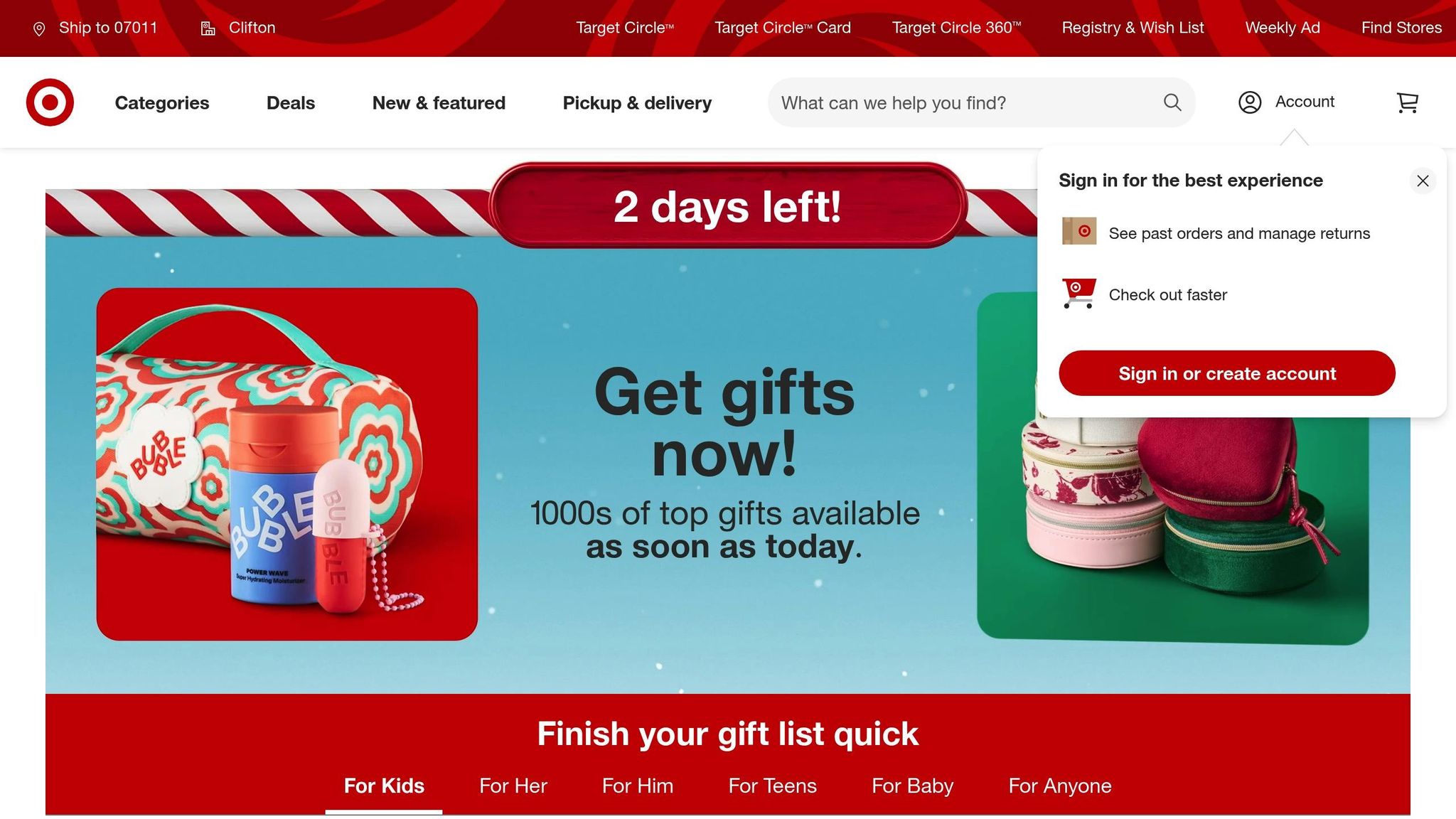
Slack’s landing page prominently showcases logos from well-known brands like Airbnb, IBM, and Target, instantly boosting credibility. Why does this work so well? Because these logos act as visual proof of Slack’s reliability and quality. When visitors recognize familiar names, it creates an immediate sense of trust. Research backs this up - client logos on landing pages can increase conversions by as much as 15%. Additionally, studies show that 92% of consumers trust recommendations from peers and industry experts. For B2B audiences considering communication tools, these logos answer a crucial question: “Is this platform capable of meeting our needs?”
Clear and Engaging Design
Slack ensures these logos grab attention by placing them prominently above the fold - right where visitors are most likely to notice them. According to CXL, client logos stick in people’s minds with minimal effort, making them a powerful tool for recall. The page design is clean and professional, avoiding unnecessary clutter while maintaining a polished look. Alongside the logos, Slack includes statements like “Trusted by millions of teams,” reinforcing not just trust but also the platform’s widespread adoption. This combination of visuals and messaging creates a seamless experience that immediately conveys credibility.
Relevance to Target Audience
Slack’s use of social proof is laser-focused on its core audience: enterprise teams. For large organizations, seeing logos from brands like IBM or Target serves as a powerful signal that Slack can handle complex, large-scale operations. This is particularly important for B2B buyers who prioritize factors like security and scalability. By showcasing these trusted names, Slack reassures potential customers that its platform is not just capable but proven in demanding professional settings.
Demonstration of Real-World Results
By featuring logos from industry leaders across sectors like tech, retail, and manufacturing, Slack highlights its broad appeal and versatility. This cross-industry representation helps potential customers see themselves in the mix, reducing any hesitation about whether Slack is the right fit for their business. It’s a subtle but effective way of saying, “If it works for them, it’ll work for you too.” These real-world examples make the case for Slack’s reliability and scalability at the moment when trust matters most.
4. Studio 331 - Real-Time Activity Notifications
How It Builds Trust
Studio 331's landing page uses real-time notifications and pop-ups to showcase live customer interactions - like recent purchases or the number of visitors currently browsing. These updates act as instant proof that others are engaging with the brand, which can ease hesitation for new visitors. For example, a live notification about recent signups taps into the fear of missing out (FOMO) to enhance credibility. Studies suggest that adding recent sales notifications can increase conversions by up to 15%, and 66% of shoppers say social proof makes them more likely to buy.
Thoughtful, Eye-Catching Design
The notifications on Studio 331’s page are designed to be subtle yet effective. They’re small enough not to distract from the main content but noticeable enough to grab attention. Positioned near decision-making areas - like call-to-action buttons - they offer a gentle push right when visitors are deciding whether to sign up. To keep things fresh and engaging, the notifications cycle through different types of updates, such as recent sales, live visitor counts, and new reviews. This dynamic design signals that the page is active and constantly updated rather than stagnant. It’s a clever way to enhance the social proof elements already present further down the page.
Resonating With the Audience
For Studio 331’s target audience, these real-time updates highlight active participation, showing that others are already on board. This kind of reassurance is especially valuable for early adopters, who may hesitate to try something new. By demonstrating that peers have already made the leap, these notifications reduce uncertainty and make the decision to engage feel safer.
Proving Real-Time Results
With its thoughtful design and targeted messaging, Studio 331’s live notifications provide tangible proof of activity. They create the impression of a thriving, trusted community, where seeing others take action inspires visitors to do the same. Whether it’s a notification about a recent purchase or a new signup, these real-time updates confirm demand instantly. This subtle but effective strategy helps turn hesitation into action by reinforcing that the product is both popular and in demand right now.
5. LiveControl - User-Generated Content
Effectiveness in Building Trust
LiveControl taps into the power of user-generated content (UGC) to build trust with its audience. Instead of relying on polished promotional videos, the platform features live-stream events directly on its landing page. Visitors see real broadcasts happening in real-time - raw, unfiltered, and authentic. This approach resonates with potential customers, as 79% of consumers report that UGC plays a major role in influencing their purchasing decisions. By showcasing other users successfully streaming live events, LiveControl addresses any doubts about the software's functionality. People naturally trust content created by fellow users more than traditional marketing materials. This live, user-driven content works hand-in-hand with other forms of social proof, offering a compelling reason for early adopters to trust the platform.
Clear and Engaging Design
LiveControl’s landing page uses dynamic visuals to instantly connect with visitors. By embedding live customer broadcasts, the platform provides a clear, relatable view of how its software performs across various scenarios. Whether it’s a corporate webinar or a concert, these live streams are strategically placed to capture attention and reassure potential users at critical moments in their decision-making process, a key goal when using a landing page idea generator. This design choice not only highlights LiveControl’s commitment to quality but also reinforces its reliability as a live-streaming solution.
Relevance to Target Audience
For users of live-streaming software, seeing real-world results is essential. LiveControl understands this need and ensures its target audience - whether hosting a gaming stream, concert, or business event - can see the platform in action. By showcasing real customer broadcasts, the landing page effectively eliminates doubts about the software's capabilities. This strategy aligns perfectly with the preferences of younger consumers, as 91% of people aged 18-34 trust online reviews as much as personal recommendations.
Demonstration of Real-World Results
The embedded live streams go beyond traditional testimonials by offering real-time proof of LiveControl’s performance. Visitors don’t just read about the platform’s streaming quality - they experience it firsthand. This approach builds confidence in a way that static reviews or claims cannot. Research shows that high-quality, positive reviews can boost landing page conversion rates by up to 270%. LiveControl takes this concept a step further, letting the product prove itself through actual customer usage, making the case for its reliability and effectiveness even stronger.
6. SEMRush - Customer Testimonials with Photos
Effectiveness in Building Trust
SEMRush takes a smart approach to building trust by incorporating photo-enhanced testimonials on its landing page. The page prominently features logos from well-known companies like eBay, HP, Quora, and Philips. These recognizable names act as a stamp of approval, signaling to potential users that if these industry leaders rely on SEMRush, it’s likely a dependable choice for them too. Additionally, SEMRush highlights its accolades, such as winning "Best SEO Software Suite" and "Best Digital Tool", reinforcing its credibility with third-party endorsements. With a user base of over 6,000,000, this combination of peer validation and awards creates a strong foundation for showcasing customer testimonials.
Clear and Engaging Design
SEMRush’s landing page design is all about grabbing attention and building trust quickly. Testimonials and brand logos are placed above the fold, ensuring visitors see them immediately. What makes these testimonials stand out is the inclusion of real photos, along with full names and job titles. This human touch adds authenticity and helps counter any doubts about the reviews. Studies back this up: testimonials with photos are much more memorable than those without. Plus, adding job titles to testimonials has been shown to increase conversions by 18.7%.
Relevance to the Target Audience
SEMRush knows its audience - marketing professionals and business owners looking for reliable SEO tools. By showcasing testimonials from major brands and including job titles and company details, the platform makes these endorsements feel more relatable and trustworthy. For potential users, seeing that others in similar roles or industries trust SEMRush provides an extra layer of reassurance.
Demonstration of Real-World Results
Pairing customer photos with names and contextual details isn’t just about aesthetics - it’s about proving results. This approach directly addresses concerns about fake reviews, offering clear evidence that SEMRush delivers measurable value to its users. It’s a simple yet effective way to demonstrate the tool’s impact on real businesses.
sbb-itb-9a9c51d
7. Notion - Case Studies with Before and After Metrics
Effectiveness in Building Trust
Notion uses case studies to showcase real, measurable outcomes instead of making general claims. These case studies focus on specific challenges and the results achieved, offering decision-makers a clear view of the Return on Investment (ROI) they can expect. This approach resonates with B2B prospects who need solid data to make informed choices and validate a product idea. In fact, research highlights that 56% of enterprise-level buyers and 23% of small business owners were influenced by case studies when making a technology purchase in the past six months. This makes case studies a powerful tool for establishing credibility.
Clear and Engaging Design
Notion structures its case studies in a logical, easy-to-follow format: identifying the client, outlining the challenge, detailing the solution, and presenting the results. The use of visual aids like charts and graphs makes the data more digestible and engaging. These elements not only make the information stand out but also help underline the key metrics, offering compelling evidence of success.
Relevance to Target Audience
These case studies are designed to resonate with professionals and teams by showing how Notion delivers results in similar work environments. This approach reduces uncertainty, making it easier for decision-makers to trust the product. People often rely on the experiences of others in similar situations to guide their decisions, and this is especially true for professionals. With 91% of millennials trusting online reviews and case studies as much as personal recommendations, this type of social proof is highly effective in reaching the right audience.
Demonstration of Real-World Results
Notion pairs specific metrics with customer quotes to validate its claims. Instead of vague statements, these case studies include precise data, such as percentage increases in productivity or time saved. This level of detail adds authenticity and builds trust. Such a data-driven approach can increase conversion rates by up to 34% on sales pages. When potential customers see real-world results from actual users, they are far more likely to take action.
8. Shopify - Social Media Mentions

Effectiveness in Building Trust
Shopify knows that 92% of consumers trust recommendations from other people over branded content. To tap into this, Shopify uses social media mentions on landing pages as a way to build trust. A standout example is Fashion Nova's campaign, which promoted the hashtag #NovaBabe on Instagram. By June 2022, this hashtag had inspired over 1.7 million posts from real customers showing off their Fashion Nova outfits. This flood of user-generated content creates what Shopify calls "wisdom of the crowd" social proof. It’s a powerful message to potential customers: thousands of people already trust and love these products.
When people see posts from actual users, it makes a real impact. In fact, 78% of shoppers say they feel more confident about buying when they see user-generated content, like social media posts. Unlike polished ads, these mentions show products in everyday settings, making it easier for hesitant shoppers to trust what they’re seeing. This natural authenticity ties directly into Shopify's design features, which amplify this effect.
Clear and Engaging Design
Shopify doesn’t just rely on social proof - it weaves it into the very fabric of its page designs. Social media mentions are highlighted through branded hashtags and live social feeds, which showcase real-time interactions. Brands using Shopify can embed Instagram or Twitter feeds directly onto their landing pages, giving visitors a window into how others are engaging with their products. Shopify also supports tools like "Social Media Icons by Zotabox", which display the number of times content has been shared, encouraging new visitors to join the conversation.
Take Pipcorn, a snack brand on Shopify, as an example. They share customer photos on their social channels and landing pages, tagging the original posters. They even invite others to share their experiences for a chance to be featured. This approach has helped them create a community-driven trust model. And it works - 71% of people are more likely to make a purchase when they see social media referrals.
Demonstration of Real-World Results
The impact of social media mentions isn’t just theoretical - it’s backed by real results. For instance, Crew Clothing saw a 5.24% boost in conversions after showcasing trending product counts. Similarly, Shelf Expression doubled its conversion rate by featuring photo-based user reviews. These examples highlight how displaying real-time social chatter not only builds trust but also drives sales. By turning casual browsers into confident buyers, social proof becomes a direct contributor to a brand’s success.
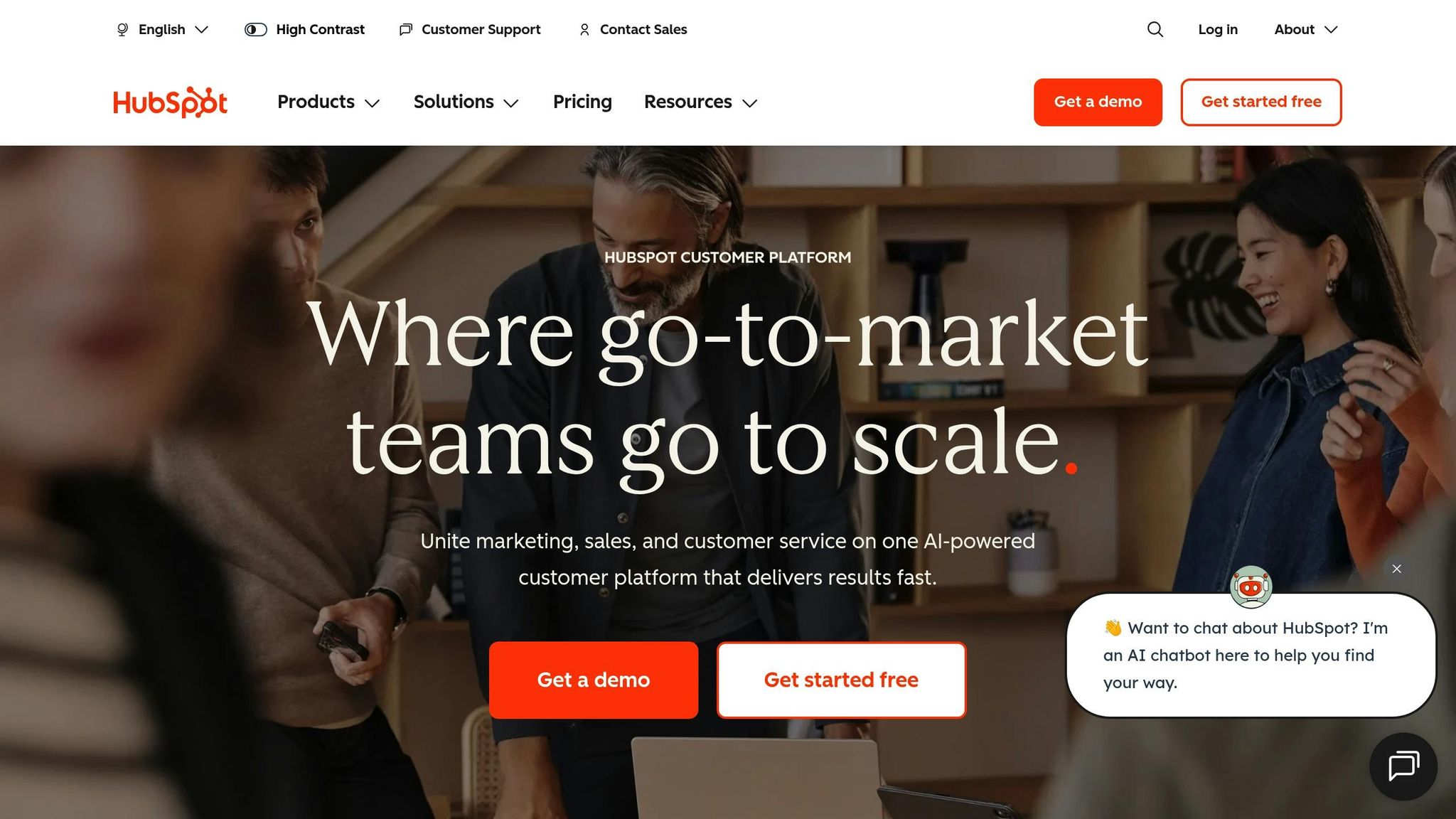
9. HubSpot - Industry Expert Endorsements
Effectiveness in Building Trust
HubSpot takes full advantage of social proof by showcasing endorsements from its own internal experts. For instance, their landing pages often feature quotes from senior leaders, such as the Global Head of Brand Marketing, to immediately establish trust with visitors considering a download or signup. This approach taps into a simple yet powerful idea: when a respected authority endorses something, their credibility naturally extends to the brand.
Consider this: 90% of customers check reviews and endorsements before making a purchase, and 74% say positive reviews play a key role in building trust with a company. For B2B audiences, having expert validation is especially important to affirm the quality and effectiveness of a service. As Hannah Harris, a HubSpot Strategist, explains:
"These small trust signals go a long way in getting users to click download. I mean, who wouldn't feel more comfortable moving forward without knowing it's legit?"
This method of using expert endorsements not only builds credibility but also integrates seamlessly into their landing page design, enhancing the overall user experience.
Clear and Engaging Design
HubSpot doesn’t just rely on endorsements - they make sure these endorsements are front and center. Each expert quote is accompanied by the expert’s name, photo, and title, adding a layer of authenticity. These elements are strategically positioned above the fold, ensuring visitors see them right away, reducing hesitation during the decision-making process.
The landing pages are designed with a professional audience in mind, featuring scannable navigation and section jump links. This setup allows busy users to quickly find the insights most relevant to them. HubSpot also keeps the tone conversational and benefit-focused, making the content feel approachable. Ariel Gonzalez, Content Marketing Manager at HubSpot, emphasizes this point:
"Every line of copy should showcase what's inside - whether it's toolkits, workflows, or how-to guides. Use relevant and appealing images that tease your offer, keep formatting scannable."
This thoughtful design approach doesn’t just make the pages visually appealing - it reinforces the sense of trust and professionalism that resonates with their target audience.
Relevance to Target Audience
HubSpot ensures that the expert endorsements they feature align directly with their audience’s needs. For example, a marketing report might include insights from a marketing leader, while a sales resource would highlight a sales expert. This tailored approach works because audiences view industry authorities as role models, making their endorsements more persuasive. Drue Stinnett, Former Senior Premium Content Strategist at HubSpot, highlights this strategy:
"The secret is actually in the content creation process... making sure that they have this unique perspective from what it's like to run social media at HubSpot... and having really concrete examples from other brands who are doing social really well."
For B2B and SaaS audiences, this type of expert validation is particularly impactful. Studies show that 92% of people trust recommendations from others over traditional advertising, and endorsements from recognized authorities carry even greater influence.
Demonstration of Real-World Results
The combination of expert endorsements and third-party reviews significantly boosts conversion rates. Top-performing pages often convert at 5.31% or higher, compared to the average of 2.35%, with some pages achieving up to a 270% improvement by leveraging social proof effectively.
HubSpot also integrates third-party reviews from trusted platforms like G2, Clutch, and Google directly into their landing pages. This mix of internal expert quotes and external reviews creates a robust trust-building system. Together, these elements work to turn hesitant visitors into confident leads, complementing the broader social proof strategies discussed earlier.
10. Patreon - Community Forums and Events
Effectiveness in Building Trust
Patreon takes trust-building to another level by showcasing its vibrant creator community. With hundreds of thousands of creators actively sharing exclusive content and interacting with their fans, the platform creates a sense of belonging and credibility for potential users. This active participation acts as a powerful form of social proof - when people see others thriving on the platform, they’re more likely to join.
Patreon also strengthens trust by enabling direct fan engagement through group chats, comments, and direct messages. This approach aligns with consumer preferences, as 88% of users trust platforms that facilitate direct interactions. Artist KAMAUU sums it up perfectly:
Patreon provides a space for artists to sustain ourselves by connecting us directly to our own communities.
By fostering these connections, Patreon not only builds trust but also positions itself as a platform where creators and fans can engage meaningfully.
Clear and Engaging Design
Patreon’s landing pages are designed to inspire confidence. Featuring successful creators and showcasing their actual earnings, the platform validates its effectiveness. Key community-driven features, such as discussion forums and live interactions, take center stage, emphasizing the active engagement happening in real-time. As Anil Parmar, Co-founder of Glorywebs, explains:
Seeing an active user base encourages new visitors to participate and engage with the brand.
Beyond community engagement, Patreon highlights tools that help creators grow both creatively and professionally. The platform states:
Patreon isn't just for creative growth, it's for professional growth too. Get in-depth analytics about your fans... and tap into a growing creator community.
This balance between fostering creativity and offering practical tools makes Patreon appealing to creators looking for both connection and sustainable income.
Demonstration of Real-World Results
Patreon’s approach delivers tangible outcomes. 78% of shoppers feel more confident making decisions when they see user-generated content, such as community interactions. Additionally, 52% of businesses report stronger brand loyalty after adopting social proof strategies. By offering a model that operates "outside of the ad-based ecosystem", Patreon appeals to creators seeking direct relationships with their fans. This unique focus on community engagement transforms hesitant visitors into loyal users, giving the platform a clear edge in the creator economy.
Conclusion
Social proof isn’t just a nice addition to your landing pages - it’s a game-changer for conversions. The stats back this up: 92% of people trust recommendations from others over traditional advertising. Even more impressive, strong social proof can more than double conversion rates. Features like live user counts, customer testimonials, trust badges, and real-time activity notifications all work together to answer one crucial question: "Can I trust this?"
The examples we’ve covered - dynamic user counts, trust badges, authentic testimonials, and real-world case studies - show how effective landing pages combine different types of social proof to establish credibility from multiple angles.
If you’re ready to take action, tools like LaunchSignal make implementing social proof straightforward. With features like live user counts and built-in email collection, you can start building trust immediately. LaunchSignal’s ready-to-use landing page templates let you highlight real-time activity and early adopter interest - exactly the kind of social proof that turns hesitant visitors into loyal users, no coding required.
Consider this: 88% of consumers trust user reviews, and 78% rely on user-generated content. Placing these elements strategically - like above the fold or near your call-to-action - can instantly reassure visitors and boost conversions. Whether you’re launching a new product or optimizing an existing page, the right social proof strategy can create trust that lasts.
FAQs
How does social proof help improve landing page conversions?
Social proof plays a key role in boosting landing page conversions by establishing trust and easing doubts. When visitors see that others - whether they’re customers, industry professionals, or peers - have had positive experiences with a product, it reassures them and encourages action. This could take the form of customer testimonials, star ratings, expert endorsements, or real-time data, such as the number of recent purchases or sign-ups.
Tapping into this natural human tendency to follow others' actions adds both credibility and urgency. For instance, displaying verified reviews or showcasing live activity feeds can make a big difference in engagement and conversion rates. Tools like LaunchSignal make it easy to add these elements through customizable templates and features, helping you test and fine-tune your landing pages for better results.
What are the most effective types of social proof for building trust on landing pages?
The most effective way to build trust through social proof is by showcasing genuine endorsements from real people or organizations. Expert recommendations - like those from influencers or industry leaders - carry weight because they show that someone with knowledge and authority stands behind your product. Similarly, customer testimonials and reviews, especially when they include specific outcomes, highlight positive experiences in a relatable way. For an even stronger impact, case studies and success stories provide in-depth examples of how your product has addressed real challenges.
Other effective methods include leveraging social media mentions, user-generated content (UGC), and live activity notifications (e.g., "X people purchased this today") to demonstrate ongoing interest and create urgency. Additionally, certifications, awards, and trust badges from well-known organizations can reassure potential customers about the quality and reliability of your product.
LaunchSignal makes it easy to incorporate these trust-building elements into your landing pages, helping you quickly validate ideas and turn visitors into early adopters.
How does showing real-time user activity influence visitor decisions?
Real-time user activity can turn a landing page into an engaging, trust-building powerhouse by highlighting live interactions. When visitors see updates like "200 people are viewing this now", recent purchases, or alerts about low stock, it sparks urgency and builds trust. These elements tap into FOMO (Fear of Missing Out) and the Bandwagon Effect, encouraging visitors to act quickly.
Take this for example: a live message like "Only 2 items left" creates a sense of scarcity, while a notification such as "Sarah from Chicago just purchased this!" adds a layer of social proof. In the U.S., where consumers often trust online reviews as much as recommendations from friends, these real-time updates strengthen confidence and influence decisions. LaunchSignal makes it simple to integrate these features into your landing pages, helping you build credibility and drive early sign-ups with ease.
Start validating ideas in minutes not days
Create high-converting landing pages. Test with real users. Get purchase signals. Know what to build next.
Visit LaunchSignal