January 27th, 2026
5 Ways To Segment Landing Page Visitors
Improve conversions by tailoring landing pages using demographics, geography, traffic source, behavior, and device-based visitor segments.
Warren Day
Not all visitors are the same. A mobile user from a Facebook ad has different needs than a desktop user from Google. Treating them the same can cost you conversions.
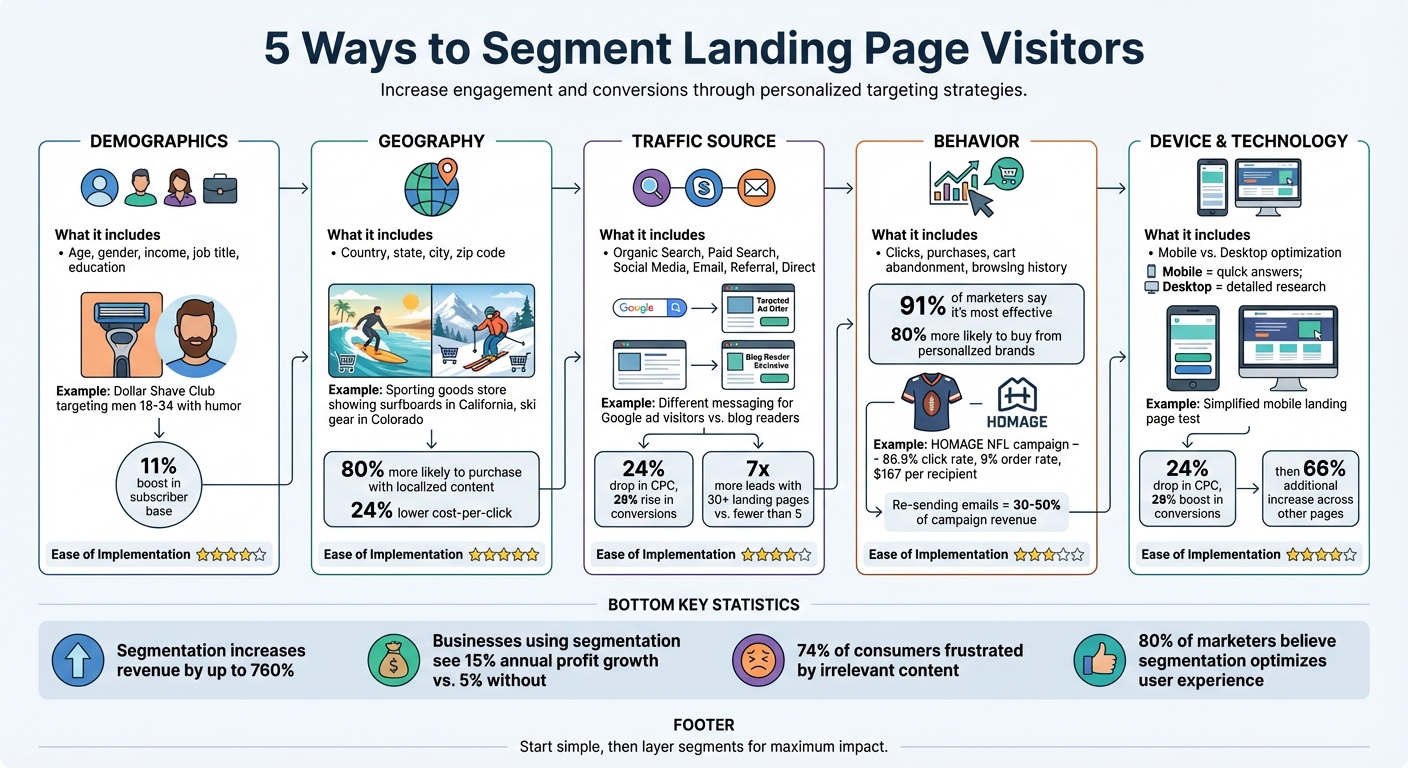
5 Landing Page Visitor Segmentation Methods Comparison
Value Summary
Segmentation boosts conversions by tailoring landing pages to specific visitor groups. It improves ad performance, reduces costs, and aligns your message with audience intent. Here are five proven ways to segment visitors:
- Demographics: Age, gender, income, or job title.
- Geography: Location-based content, like currency or climate-specific offers.
- Traffic Source: Adjust messaging based on how users find your page (Google, Facebook, email, etc.).
- Behavior: Personalize based on clicks, purchases, or cart abandonment.
- Device: Optimize for mobile or desktop to match user expectations.
Bridge
Each method can make your landing pages more relevant, improving both user experience and revenue. Let’s dive in.
1. Segment by Demographics
To create a truly effective landing page, you need to know who your visitors are. Demographics provide key insights into their age, gender, income level, job title, and education. By tailoring your page to reflect these characteristics, you can speak directly to their needs. For example, the priorities of a college student on a tight budget will differ significantly from those of an executive with more disposable income. Your messaging should reflect these distinctions.
Why It Works
Demographic segmentation is so effective because a single message rarely resonates with everyone. As Fahad Muhammad from Instapage points out:
"Demographic segmentation is perhaps the most commonly used method among the four main types of marketing segmentation... because landing page copy written for millennials won't be enough to convince boomers to click the CTA button."
A great example comes from Dollar Shave Club. By targeting men aged 18–34 with humor-filled ads specifically crafted for that audience, they achieved an 11% boost in their subscriber base. This shows the power of crafting messages that align with where your audience is in life.
Simple to Implement
Demographic data is not only powerful but also relatively easy to gather and use. For instance:
- Location can be identified automatically through IP addresses.
- Age and gender can be collected with simple form fields or multiple-choice questions.
- In B2B scenarios, tools can extract job titles and company details from email addresses, keeping forms short and user-friendly.
You can even use tools like Dynamic Text Replacement (DTR) to personalize keywords or location names based on a visitor's search query. This creates a custom experience without the need to build multiple pages. Platforms like LaunchSignal make this process even easier by offering dynamic landing page templates with integrated analytics to capture user behavior data.
Boosting Conversions
When your copy, visuals, and offers align with specific demographic groups, you're addressing their unique needs - and that leads to better results. Anna Talerico from Online Behavior explains:
"A personalized experience, based on who someone is and what they are interested in, is more relevant to the visitor... which makes them more likely to convert."
This isn't just about direct conversions. Demographic-focused messaging can also enhance your Google Quality Score, which helps lower your cost per click and improves ad visibility. In short, tailoring your landing page to your audience not only drives conversions but also makes your advertising budget work harder.
2. Segment by Geography
Where your visitors are located plays a big role in how they interact with your content. Geographic segmentation organizes your audience based on location - whether that's by country, state, city, or even zip code - allowing you to create more personalized landing pages. Just like demographic segmentation, this approach fine-tunes your message by making it more relevant to your audience’s surroundings. Laura Barker from AdRoll explains it best:
"Geographic segmentation is the practice of grouping members of an audience based on location, including where they live, work, and shop."
Ease of Implementation
Using geographic segmentation is simple because location data is easy to access. A visitor's IP address can quickly reveal their country, region, or city. With this information, you can adjust your landing page to display the correct currency (e.g., showing prices in USD for U.S. visitors), switch to the appropriate language, or even swap out visuals to reflect local tastes and norms.
Dynamic Text Replacement (DTR) takes this customization a step further by inserting a visitor's city name directly into your landing page headlines based on their search query. For instance, instead of creating separate pages for Boston, Houston, and Seattle, one page can adapt dynamically to each location. Tools like LaunchSignal offer templates that make these dynamic adjustments easy, saving you time while still delivering a personalized experience.
Effectiveness in Improving Targeting
Geographic targeting ensures your content resonates with visitors by aligning with their local context. For example, a sporting goods store can promote surfboards to visitors in California while showing ski gear to those in Colorado - all based on their location and climate. This strategy is particularly impactful, as nearly one-third of online shoppers in the U.S. search for local businesses daily. Including neighborhood-specific details or local testimonials can instantly build trust. As Neil Patel points out:
"Testing different ideas and approaches when location is taken into account can create very interesting insights–and often much different conversion rates."
Impact on Conversions
When visitors encounter content tailored to their location - like prices in their currency, products suited to their climate, or headlines mentioning their city - they’re 80% more likely to make a purchase. Geographic segmentation also boosts ad performance. If your landing page matches the location-specific promise of your ad (e.g., "Plumber in Austin"), it strengthens message consistency and can lower your cost-per-click by up to 24%.
sbb-itb-9a9c51d
3. Segment by Traffic Source
When visitors land on your site, their intent often depends on how they got there. Someone clicking a Google ad likely has a different mindset than someone arriving via a Facebook post or an email link. By identifying where your traffic comes from, you can fine-tune your messaging to align with their expectations. As Kristen McCormick from WordStream explains:
"A person arriving at your landing page from a Google ad will be in a different mindset than someone arriving from an email, or from social, or from a banner ad."
Layering traffic source insights onto demographic and geographic data can make your targeting even more precise.
Ease of Implementation
Most analytics tools automatically track where your visitors come from, grouping them into categories like Organic Search, Paid Search (PPC), Social Media, Email, Referral, and Direct [17, 19]. For a simple start, you can use Google Analytics to monitor these sources and tools like Google Optimize to customize page elements based on traffic origin [7, 19]. If you're running PPC campaigns, Dynamic Text Replacement (DTR) can adjust keywords on your landing pages to match the search terms users entered. Platforms like LaunchSignal also streamline the process, offering templates and built-in analytics to help you create tailored landing pages quickly.
Effectiveness in Improving Targeting
Different traffic sources often signal different levels of intent. Visitors from search ads tend to have a clear goal in mind, making them more likely to respond to product-focused landing pages with strong calls-to-action. On the other hand, those coming from blog posts are usually in a research or reading mode, preferring content-rich pages with softer conversion options like email signups. Rafael Damasceno from Seer Interactive sums it up well:
"A lot of context about users can be discovered by carefully analyzing their sources... you'll better match your message to their current context and 'mood', potentially seeing greater overall results down the road."
Maintaining a consistent message between the ad or link that brought users to your page and the page itself minimizes confusion and reduces bounce rates [1, 17]. This approach also boosts your Google Ads Quality Score, potentially lowering your cost-per-click [7, 17].
Impact on Conversions
Tailoring your landing pages to specific traffic sources can significantly boost your conversion rates. For instance, tests with segmented, source-specific landing pages have shown a 24% drop in cost-per-click and a 28% rise in conversions. Additionally, businesses with more than 30 landing pages generate seven times more leads than those with fewer than five. Creating dedicated pages for each traffic source not only improves user experience but also delivers clearer performance data, helping you allocate your marketing budget more effectively and cut spending on channels that underperform.
Next, let’s look at how analyzing visitor behavior can further refine your targeting.
4. Segment by Behavior
Behavioral segmentation helps you understand your audience by tracking their actions - like clicks, purchases, or cart abandonment. This approach gives you a clear view of visitor intent, making it easier to tailor your marketing efforts. Research backs this up: 91% of marketers say behavioral segmentation is the most effective method, and 80% of consumers are more likely to purchase from brands that offer personalized experiences. By focusing on engaged users instead of cold leads, you can ensure your marketing dollars are well spent. Combine behavioral data with demographic, geographic, and source segmentation to create a complete picture of your audience for precise targeting. Let’s dive into how tracking tools can make this process straightforward and impactful.
Ease of Implementation
You don’t need a tech team to start tracking behavior. Tools like Freshmarketer or Hotjar provide heatmaps showing where visitors click and how far they scroll. Platforms such as HubSpot or Twilio Segment let you monitor specific actions, like button clicks, video plays, or form submissions. A great starting point is segmenting new visitors from returning ones. For instance, someone who browses a product page might need an informational nudge, while a visitor who adds an item to their cart but doesn’t check out might respond better to a reminder or incentive.
"Behavioral segmentation is about listening to your audience, understanding their preferences, and reaching out to them with relevant content they're actually interested in."
- Devin Bhatia, Principal Customer Success Manager, Klaviyo
If you’re using tools like LaunchSignal, its built-in analytics can track user actions, making it easy to personalize your landing pages for better engagement.
Effectiveness in Improving Targeting
Behavioral data allows you to fine-tune your messaging to match where customers are in their journey. For example, new visitors might need trust-building content or an introduction to your brand, while returning visitors could respond better to targeted upsells or special offers. You can even customize content based on what your audience values - price-conscious shoppers might appreciate discounts, while others may prefer messaging that highlights premium quality. Tools like Smart Traffic take it a step further by using AI to direct visitors to the landing page variant most likely to convert, based on their past behavior. This ensures your personalization efforts work in real-time.
Impact on Conversions
Here’s a real-world example: HOMAGE, an apparel brand, used behavioral segmentation to target loyal NFL fans during their Starter jacket campaign. By offering exclusive early SMS access, they achieved impressive results - 100 orders in the first hour, an 86.9% click rate, a 9% order rate, and an average of $167 per recipient. Another effective strategy? Re-sending emails to subscribers who clicked but didn’t make a purchase. This simple tactic can generate 30% to 50% of a typical campaign’s revenue.
5. Segment by Device and Technology
People interact with websites differently depending on the device they’re using. Mobile users often look for quick answers and seamless experiences, while desktop users are more likely to dive into detailed research or complete longer forms. Understanding these behaviors allows you to design landing pages that align with what users expect on each device.
Ease of Implementation
The good news? Most analytics tools already identify whether visitors are using mobile or desktop devices, making segmentation straightforward. Heatmap tools like Hotjar or Freshmarketer can show you if mobile users are engaging with your call-to-action buttons or just scrolling past them. Even better, platforms like Google Optimize or Unbounce let you create device-specific versions of your landing pages - no custom coding required. With this setup, you can tweak key elements to better suit the device each visitor is using.
"Just because your website converts well on desktop, its performance may not translate to mobile. Don't forget to assess heatmaps across major device types, each of which comes with its own UX idiosyncrasies." - Twilio Segment
Effectiveness in Improving Targeting
Device segmentation allows you to fine-tune the user experience (UX) based on platform-specific needs. For mobile, this might mean larger buttons, vertical scrolling, and concise content. On desktops, you can take advantage of multi-column layouts or hover effects. For example, desktop users might be planning future trips, while mobile users are more likely to search for immediate, local options. By matching your design to the device, your landing page feels more relevant, which can lead to better ad Quality Scores, lower cost-per-click, and increased visibility.
Impact on Conversions
Tailoring your landing pages to specific devices doesn’t just improve the user experience - it can have a direct impact on your bottom line. Senior Performance Marketer Kayleigh Dibble tested a simplified mobile landing page with streamlined navigation against the original version. The results? A 24% drop in cost-per-click and a 28% boost in conversion rates. When this approach was applied across other pages, overall conversions jumped by an additional 66%. The lesson here is clear: ditch the one-size-fits-all approach. Optimizing your design for different devices sharpens your messaging, makes your calls-to-action more effective, and ultimately drives better results.
If you’re using tools like LaunchSignal, their device-specific templates and built-in analytics make it easier to monitor user behavior and tweak your landing pages for each device type.
Conclusion
Segmentation transforms generic landing pages into personalized experiences that cater to your visitors' specific needs. By dividing your audience using factors like demographics, location, traffic source, behavior, and device type, you not only enhance the user experience but also drive significant revenue growth. For instance, segmentation has been shown to increase revenue by up to 760%. Additionally, businesses that focus on tailored strategies for distinct customer segments see a 15% annual profit growth, compared to only 5% for those that don't.
But here's the thing: segmentation isn’t a one-and-done task. It’s an ongoing effort. Customer preferences evolve, new traffic sources emerge, and strategies that worked last month may need adjustments today. As Rafael Damasceno from Seer Interactive aptly states:
"Segmentation is something you should do as much as you have time to".
Start simple. Begin with segments like device type or location, then layer in behavioral data to uncover what truly drives conversions.
To make this process seamless, use tools designed for real-time segmentation. For example, LaunchSignal's analytics dashboard allows you to track the performance of various segments across your validation pages. With features to monitor email sign-ups, questionnaires, and checkout behaviors, you can quickly identify your most engaged segments and refine your messaging accordingly. Their $99 lifetime plan gives you access to three active validation pages and 10,000 monthly page views - plenty of room to test multiple strategies without committing to ongoing costs.
It’s worth noting that 80% of marketers believe segmentation is the starting point for optimizing user experiences. On the flip side, 74% of online consumers feel frustrated when website content doesn’t align with their interests. In today’s fast-paced digital world, relevance isn’t just helpful - it’s what separates a conversion from a missed opportunity.
FAQs
How does segmenting landing page visitors boost conversions?
Segmenting your landing page visitors lets you create messages, offers, and experiences that feel more personal and relevant. By tailoring your content to specific audience groups, you can connect with their unique needs and preferences. This not only boosts engagement but can also lead to better conversion rates.
For instance, you might group visitors based on demographics, behaviors, or interests. Doing so ensures your landing page speaks directly to them. When your content feels relevant, it builds trust and makes users more likely to take action - whether that's signing up, making a purchase, or diving deeper into what you offer.
What are the best tools for segmenting landing page visitors?
To break down your landing page visitors into meaningful segments, leveraging tools designed for analytics, personalization, and behavior tracking is key. These tools provide valuable insights into visitor demographics, preferences, and actions, allowing you to craft more tailored experiences.
For instance, analytics platforms can monitor actions like page views or the amount of time users spend on specific sections. This data helps you spot trends and group users into distinct segments. Personalization tools go a step further by enabling you to customize landing pages for each segment, which can lead to better engagement and higher conversion rates. On top of that, behavior analysis tools - such as heatmaps - offer a visual representation of how visitors interact with your page, helping you fine-tune your segmentation approach.
By using the right mix of tools, you can collect meaningful data and deliver content that resonates with your audience, ultimately driving improved performance for your landing pages.
Why is it important to optimize landing pages for different devices?
Optimizing landing pages for various devices is crucial because people visit your site using different tools - smartphones, tablets, and desktops - all with distinct screen sizes and ways of interacting. Adjusting your design to suit each device creates a smoother, more enjoyable experience. For instance, mobile users benefit from larger buttons and simpler navigation, while desktop visitors might appreciate more detailed layouts.
This device-specific approach also enhances technical performance. Faster load times, which can differ based on the device or network, play a key role in reducing bounce rates and keeping visitors interested. By tailoring the experience to fit each device, you can connect more effectively with your audience, encourage engagement, and ultimately drive more conversions.
Start validating ideas in minutes not days
Create high-converting landing pages. Test with real users. Get purchase signals. Know what to build next.
Visit LaunchSignal